



Keyword Clustering Explained: Boost Rankings with Smarter SEO Structure
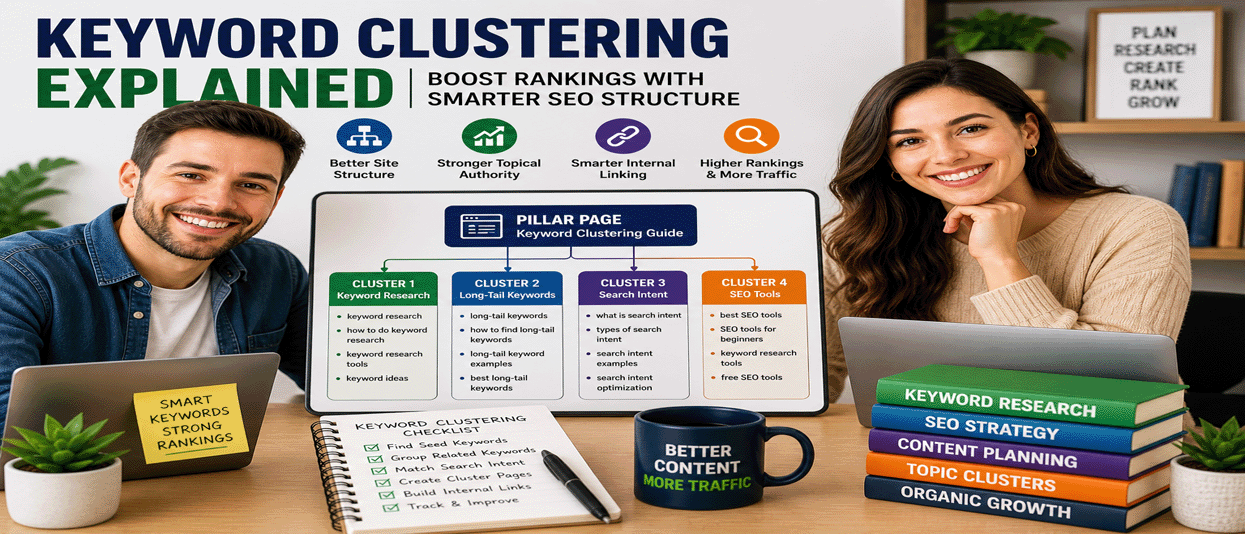
Keyword clustering is a powerful SEO strategy that helps you organize related keywords into clear content groups. Instead of creating random articles around disconnected keywords, keyword clustering gives your website a smarter structure that search engines and readers can understand.
When done correctly, keyword clusters can help improve topical authority, reduce content overlap, strengthen internal linking, and boost organic rankings over time.
What Is Keyword Clustering?
Keyword clustering is the process of grouping related keywords together based on topic, meaning, and search intent. These grouped keywords can then guide your content strategy.
For example, keywords like “keyword research,” “how to find SEO keywords,” “long-tail keywords,” and “keyword research tool” may belong in the same SEO content cluster because they support the same main topic.
Why Keyword Clustering Matters for SEO
Search engines look for helpful, organized content that fully answers a topic. Keyword clustering helps your website cover subjects more completely instead of scattering related ideas across weak pages.
- Improves website structure
- Helps build topic authority
- Supports better internal linking
- Reduces duplicate or overlapping content
- Makes content planning easier
- Helps pages target multiple related keywords
Keyword Clusters vs Topic Clusters
Keyword clusters and topic clusters are closely related. A keyword cluster is a group of related search terms. A topic cluster is a group of related pages built around a larger subject.
For example:
- Keyword Cluster: keyword research, SEO keywords, long-tail keywords, keyword ideas
- Topic Cluster: a main keyword research guide supported by articles on long-tail keywords, search intent, and competitor keywords
How to Create Keyword Clusters
Start with a main keyword, then collect related keywords that support the same topic. Look for similar meanings, related questions, shared search intent, and overlapping search results.
- Choose a main topic
- Gather related keyword ideas
- Separate keywords by search intent
- Group similar keywords together
- Choose one main page for each cluster
- Create supporting articles when needed
- Link related pages together
Example Keyword Cluster
Here is a simple keyword cluster for a website focused on SEO tools:
- keyword clustering
- keyword clusters
- SEO structure
- keyword research
- topic clusters
- SEO content strategy
- content planning
These keywords could support one strong article, while related subtopics could become supporting pages.
How Keyword Clustering Improves Content Planning
Keyword clustering helps you decide which keywords belong on the same page and which deserve separate articles. This prevents your website from competing against itself with multiple pages targeting nearly identical terms.
A smarter structure helps each page serve a clear purpose.
Using Search Intent in Keyword Clustering
Search intent is essential when building keyword clusters. Two keywords may look similar but require different content types.
- Informational: “what is keyword clustering”
- Commercial: “best keyword clustering tool”
- Transactional: “keyword clustering software pricing”
- Educational: “how to group SEO keywords”
Matching keyword clusters to search intent helps you create the right page for the right audience.
How KeywordRetriever.com Can Help
KeywordRetriever.com can help users collect keyword ideas, organize related terms, and turn keyword research into a cleaner SEO content structure. By grouping related keywords into clusters, users can build stronger pages and better content plans.
Suggested SEO Plan for This Article
- Main Keyword: keyword clustering
- Secondary Keyword: keyword clusters
- Supporting Keywords: SEO structure, keyword research, topic clusters, SEO content strategy, search intent, organic rankings, content planning
- Suggested URL: /keyword-clustering-seo-structure
- Suggested Image Alt Text: keyword clustering diagram showing SEO structure and topic clusters
Final Thoughts
Keyword clustering helps turn scattered keyword ideas into a clear SEO structure. It allows you to create stronger content, support topical authority, and guide visitors through related information.
If you want smarter content planning and better organic rankings, start grouping related keywords into clusters. With KeywordRetriever.com, you can organize keyword research into a structured SEO plan that supports long-term growth.
Keyword Related Articles
Search Intent Optimization: How to Match Keywords with Buyer Intent
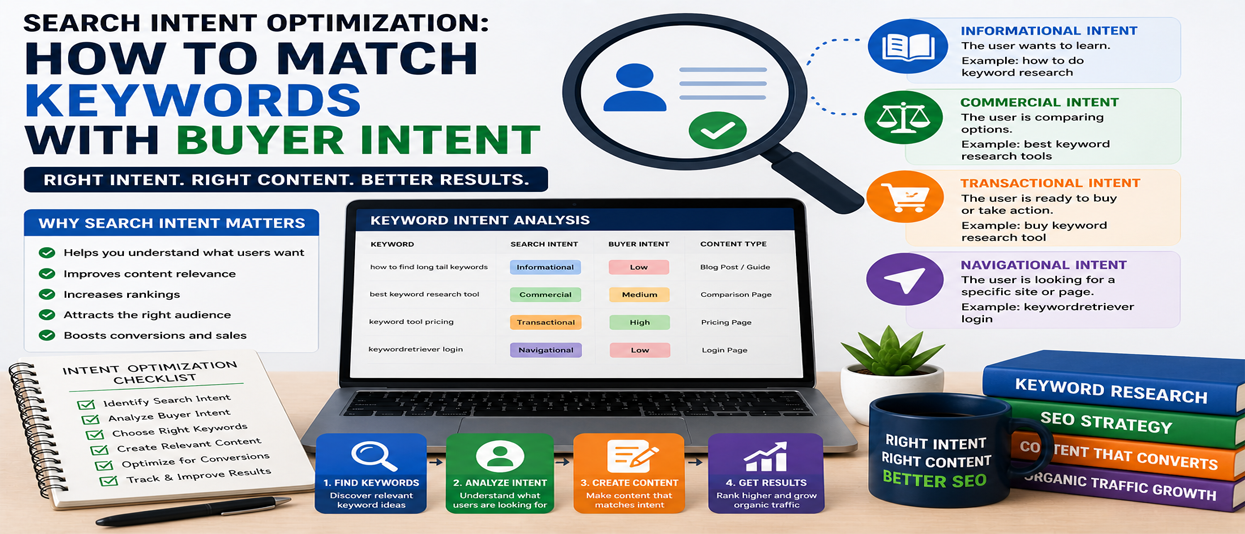
Search intent optimization is one of the most important parts of modern SEO. It helps you understand why someone is searching, what they expect to find, and how close they are to taking action.
When you match keywords with buyer intent, your content becomes more useful, more targeted, and more likely to convert visitors into leads, subscribers, customers, or clients.
What Is Search Intent?
Search intent is the purpose behind a search query. Every keyword has a reason behind it. Some people want information, some want to compare options, and others are ready to buy.
Understanding that intent helps you create the right type of content for the right audience.
The 4 Main Types of Search Intent
- Informational Intent: The user wants to learn something.
- Commercial Intent: The user is comparing products, services, or tools.
- Transactional Intent: The user is ready to buy, sign up, download, or contact.
- Navigational Intent: The user is looking for a specific brand, website, or page.
What Are Buyer Intent Keywords?
Buyer intent keywords are search terms that show a person may be close to making a decision. These keywords often include words like “best,” “compare,” “pricing,” “review,” “software,” “tool,” “service,” “near me,” or “buy.”
Examples include:
- best keyword research tool
- keyword research software pricing
- compare SEO keyword tools
- SEO tool for small business
- buy keyword research software
Why Buyer Intent Matters for SEO
Not all traffic has the same value. A visitor searching “what is keyword research” may be early in the learning stage. A visitor searching “best keyword research tool for bloggers” may be closer to choosing a solution.
By targeting buyer intent keywords, your website can attract visitors who are more likely to take action.
How to Match Keywords with Buyer Intent
Start by looking at the words inside the keyword. These words often reveal what the user wants next.
- Learn intent: how to, guide, tutorial, beginner, meaning
- Compare intent: best, top, vs, comparison, reviews
- Buy intent: pricing, cost, discount, buy, sign up
- Local intent: near me, city name, service area
Content Types for Each Search Intent
- Informational keywords: blog posts, tutorials, guides, checklists
- Commercial keywords: comparison pages, reviews, “best tools” articles
- Transactional keywords: landing pages, pricing pages, product pages
- Navigational keywords: brand pages, login pages, support pages
How KeywordRetriever.com Helps with Search Intent
KeywordRetriever.com can help users discover keyword ideas and organize them by intent. This makes it easier to create content that matches the searcher’s stage in the buying journey.
Instead of only chasing high-volume keywords, smart SEO focuses on keywords that bring the right visitors.
Suggested SEO Plan for This Article
- Main Keyword: search intent optimization
- Secondary Keyword: buyer intent keywords
- Supporting Keywords: keyword research, SEO keywords, commercial intent, transactional keywords, SEO content strategy, organic traffic
- Suggested URL: /search-intent-optimization-buyer-intent
- Suggested Image Alt Text: search intent optimization dashboard showing buyer intent keywords
Final Thoughts
Search intent optimization helps you create content that fits what people actually want. When you match keywords with buyer intent, your SEO content becomes more strategic and more likely to generate results.
Use keyword research to find intent-driven opportunities, then create the right type of page for each keyword. With KeywordRetriever.com, you can build a smarter content strategy that attracts visitors who are ready to learn, compare, and take action.
Keyword Related Articles
From Zero to 10K Visitors: Keyword Research Blueprint for New Websites

Growing a new website from zero visitors to 10,000 monthly visitors starts with smart keyword research. New websites usually do not have strong authority, so choosing the right keywords is critical. Instead of chasing impossible rankings, you need a practical keyword research blueprint built around realistic opportunities, useful content, and consistent publishing.
This guide shows how new websites can use keyword research, long-tail keywords, search intent, and content planning to build steady organic traffic over time.
Why New Websites Need a Keyword Blueprint
A new website cannot usually compete right away for broad, high-competition keywords. Large authority sites often dominate those results. A keyword blueprint helps you focus on search terms where your site has a better chance to rank.
- It gives your content strategy direction
- It helps you avoid wasting time on impossible keywords
- It reveals long-tail keyword opportunities
- It helps match content to search intent
- It creates a clear path toward organic traffic growth
Step 1: Start With a Clear Niche
Before choosing keywords, define your niche clearly. A broad website is harder to rank because it lacks topical focus. A focused niche helps Google and your visitors understand what your website is about.
For example, instead of building a general “marketing” website, a new site may focus on “keyword research for small businesses” or “SEO tools for bloggers.”
Step 2: Build a Seed Keyword List
Seed keywords are basic topics related to your niche. These are the starting points for finding more specific keyword ideas.
For KeywordRetriever.com, seed keywords may include:
- keyword research
- SEO keywords
- long-tail keywords
- search intent
- organic traffic
- keyword tool
Step 3: Find Long-Tail Keywords First
Long-tail keywords are especially important for new website SEO. These longer phrases usually have lower competition and clearer intent.
Examples include:
- how to do keyword research for a new website
- best keyword research blueprint for beginners
- how to find low competition SEO keywords
- keyword research strategy for first blog traffic
These phrases may not bring massive traffic individually, but together they can build momentum.
Step 4: Match Every Keyword to Search Intent
Search intent tells you what kind of content to create. A keyword may need a tutorial, comparison article, checklist, product page, or landing page.
- Informational: Create guides, tutorials, and how-to articles.
- Commercial: Create comparison pages, reviews, and tool roundups.
- Transactional: Create sales pages, signup pages, or product pages.
- Local: Create location-based service pages.
Step 5: Create a 90-Day Content Plan
To grow toward 10K visitors, publish consistently. A simple 90-day plan can include 2 to 3 articles per week, focused on low-competition keywords and useful topic clusters.
A beginner content plan might include:
- 10 beginner keyword research articles
- 10 long-tail keyword guides
- 10 SEO content strategy articles
- 10 competitor keyword analysis articles
- 10 search intent optimization articles
Step 6: Build Topic Clusters
Topic clusters help new websites build authority faster. A topic cluster includes one main article and several supporting articles that link together.
For example:
- Main Guide: Keyword Research for Beginners
- Supporting Article: How to Find Long-Tail Keywords
- Supporting Article: How to Analyze Competitor Keywords
- Supporting Article: Search Intent Optimization
- Supporting Article: Keyword Clustering Explained
Step 7: Optimize Every Article Before Publishing
Each article should be optimized for readers and search engines. Use your main keyword naturally in important places.
- SEO title
- Meta description
- H1 heading
- First paragraph
- H2 headings
- Image alt text
- URL slug
- Internal links
Step 8: Use KeywordRetriever.com to Find Better Opportunities
KeywordRetriever.com can help new website owners discover keyword ideas, organize content opportunities, and build a smarter SEO roadmap. By using keyword research before writing, your content has a stronger chance of attracting organic traffic.
Suggested SEO Plan for This Article
- Main Keyword: keyword research blueprint
- Secondary Keyword: new website SEO
- Supporting Keywords: 10K visitors, keyword research, long tail keywords, SEO keywords, search intent, organic traffic, content strategy
- Suggested URL: /keyword-research-blueprint-new-websites
- Suggested Image Alt Text: keyword research blueprint for new website SEO growth to 10K visitors
Final Thoughts
Growing from zero to 10K visitors does not happen by accident. It requires a focused niche, smart keyword research, long-tail keyword targeting, search intent matching, and consistent content publishing.
Start with realistic keywords, build helpful topic clusters, and use KeywordRetriever.com to guide your content plan. With the right keyword research blueprint, a new website can build steady organic traffic and long-term SEO growth.
Keyword Related Articles
Free vs Paid Keyword Tools: Which One Delivers Better SEO Results?

Keyword research tools help website owners discover the words and phrases people search for online. But one common question is whether free keyword tools are enough or if paid keyword tools deliver better SEO results.
The answer depends on your goals. Free tools can help beginners find basic keyword ideas, while paid tools often provide deeper data, faster research, competitor insights, and stronger content planning features.
What Are Free Keyword Tools?
Free keyword tools are platforms or search features that help you discover keyword ideas without paying a monthly fee. These may include autocomplete suggestions, related searches, basic keyword planners, browser extensions, and limited SEO tools.
Free tools are useful for beginners because they provide a simple starting point for keyword research.
Benefits of Free Keyword Tools
- No monthly cost
- Easy for beginners to use
- Helpful for finding basic keyword ideas
- Good for discovering long-tail phrases
- Useful for small websites with simple SEO needs
Limitations of Free Keyword Tools
Free tools can be helpful, but they often have limits. They may not provide accurate search volume, keyword difficulty, competitor data, or detailed content planning insights.
- Limited keyword data
- Fewer competitor insights
- Less accurate search volume estimates
- Limited filtering and sorting options
- Harder to build a complete SEO strategy
What Are Paid Keyword Tools?
Paid keyword tools usually provide more advanced SEO data. They may show search volume, keyword difficulty, cost-per-click, competitor rankings, keyword gaps, content ideas, and trend data.
For businesses that depend on organic traffic, paid tools can save time and help identify better ranking opportunities.
Benefits of Paid Keyword Tools
- More complete keyword research data
- Better competitor keyword analysis
- Keyword difficulty and ranking opportunity insights
- Helpful filtering for long-tail keywords
- Stronger SEO content planning
- Faster research workflow
Free vs Paid Keyword Tools: Which Is Better?
Free keyword tools are best for beginners, hobby websites, and early topic discovery. Paid keyword tools are better for serious SEO campaigns, business websites, agencies, affiliate marketers, and anyone who wants deeper data.
The best approach is often to use both. Free tools can help you brainstorm ideas, while paid tools can help you validate those ideas and choose the strongest keywords.
How to Choose the Right Keyword Tool
Before choosing a tool, think about what you need most. A good keyword research tool should help you find keywords, understand intent, compare opportunities, and organize your SEO content plan.
- Does it help you find long-tail keywords?
- Does it show useful keyword data?
- Does it help with competitor keyword research?
- Does it support search intent planning?
- Does it make content planning easier?
Where KeywordRetriever.com Fits In
KeywordRetriever.com can be positioned as a helpful keyword research resource for users who want to find keyword ideas, organize SEO opportunities, and build content that targets real search demand.
Whether users are comparing free keyword tools, paid keyword tools, or building a keyword strategy from scratch, KeywordRetriever.com can help guide the research process.
Suggested SEO Plan for This Article
- Main Keyword: free keyword tools
- Secondary Keyword: paid keyword tools
- Supporting Keywords: keyword research tools, SEO results, keyword research, long tail keywords, search intent, organic traffic
- Suggested URL: /free-vs-paid-keyword-tools
- Suggested Image Alt Text: comparison of free and paid keyword tools for SEO keyword research
Final Thoughts
Free keyword tools are a great place to start, especially for beginners. They help you discover basic keyword ideas and understand what people are searching for.
Paid keyword tools usually deliver better SEO results when you need deeper data, competitor analysis, and more advanced planning. For the strongest results, combine free keyword discovery with reliable keyword data and a clear SEO content strategy.
Keyword Related Articles
How to Use Keyword Data to Build Content That Actually Ranks
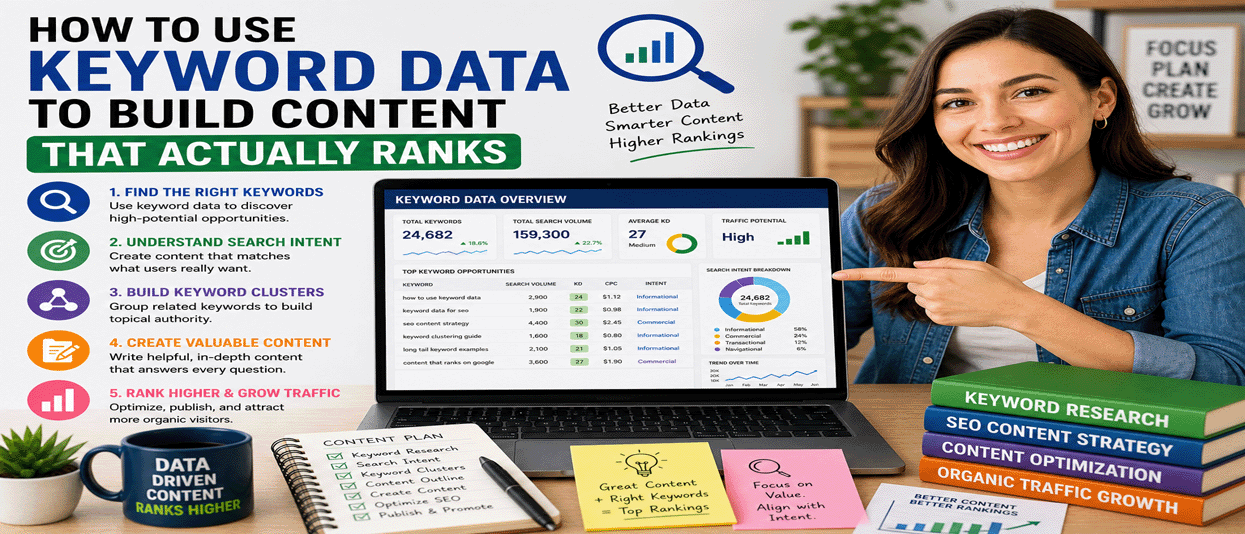
Keyword data is one of the most valuable tools in SEO because it shows you what people are searching for, how they phrase their questions, and what kind of content they expect to find. When used correctly, keyword data can help you build content that actually ranks instead of content that gets ignored.
The key is not just collecting keywords. The real power comes from turning keyword data into a focused content strategy that matches search intent, answers real questions, and gives Google a clear reason to rank your page.
What Is Keyword Data?
Keyword data includes information about search terms people use online. This may include search volume, keyword difficulty, cost-per-click, competition level, related keywords, questions, and trends.
When you understand this data, you can make better decisions about what content to create and which keywords are worth targeting.
Why Keyword Data Matters for SEO Content
Many website owners create content based on guesses. Keyword data removes much of that guesswork by showing you what your audience already wants.
- It helps you discover topics people are searching for
- It reveals long-tail keyword opportunities
- It helps you understand search intent
- It shows which topics may be too competitive
- It gives structure to your SEO content strategy
Step 1: Start With the Main Keyword
Every strong SEO page should begin with one main keyword. This keyword represents the primary topic of the page. For example, the main keyword for this article is keyword data.
Your main keyword should be specific enough to guide the article but broad enough to support related subtopics.
Step 2: Study Search Intent
Search intent is the reason behind the search. Before writing content, ask what the searcher wants. Are they trying to learn, compare, buy, or solve a problem?
- Informational: “how to use keyword data”
- Commercial: “best keyword research tool”
- Transactional: “buy SEO software”
- Problem-solving: “why is my content not ranking”
Content that matches search intent is more useful to readers and more likely to perform well in search results.
Step 3: Find Supporting Keywords
Supporting keywords help search engines understand the depth of your topic. These include related phrases, long-tail keywords, questions, and keyword variations.
For an article about keyword data, supporting keywords might include:
- SEO content strategy
- keyword research
- search intent
- long tail keywords
- keyword clusters
- organic traffic
Step 4: Build a Keyword Cluster
A keyword cluster is a group of related keywords that support the same topic. Instead of writing separate thin articles for every keyword, you can build one stronger page that covers the topic completely.
Keyword clusters help your content become more useful, more organized, and easier for search engines to understand.
Step 5: Create an SEO Content Outline
Before writing, turn your keyword data into a clear outline. Each major keyword or question can become a section of your article.
A simple SEO content outline may include:
- Introduction with the main keyword
- Definition of the topic
- Why the topic matters
- Step-by-step instructions
- Examples
- Common mistakes
- Checklist or summary
- Conclusion with a call to action
Step 6: Write for People First
Keyword data helps guide your content, but your article should still sound natural. Avoid stuffing keywords into every sentence. Instead, use keywords where they make sense and focus on helping the reader.
Strong SEO content is clear, useful, organized, and easy to read.
Step 7: Optimize Important SEO Areas
Once your article is written, place your keywords in the most important SEO areas.
- Page title
- Meta description
- H1 heading
- H2 headings
- First paragraph
- Image alt text
- URL slug
- Internal links
Step 8: Use KeywordRetriever.com for Smarter Planning
KeywordRetriever.com can help users collect keyword ideas, organize keyword data, and build better SEO content plans. By using keyword insights before writing, you can create content around real search demand instead of guessing.
This makes your content strategy more focused and gives each page a stronger chance to rank.
Suggested SEO Plan for This Article
- Main Keyword: keyword data
- Secondary Keyword: SEO content
- Supporting Keywords: content that ranks, keyword research, search intent, long tail keywords, keyword clusters, SEO content strategy
- Suggested URL: /use-keyword-data-build-content-that-ranks
- Suggested Image Alt Text: keyword data dashboard used to build SEO content that ranks
Final Thoughts
Keyword data turns SEO content creation from guesswork into strategy. It helps you understand what people search for, what they expect, and how to structure content that can perform better in Google.
Use keyword data to choose better topics, match search intent, build keyword clusters, and create helpful content. With a smart process and a tool like KeywordRetriever.com, you can build SEO content that has a much better chance of ranking and bringing in organic traffic.
Keyword Related Articles