



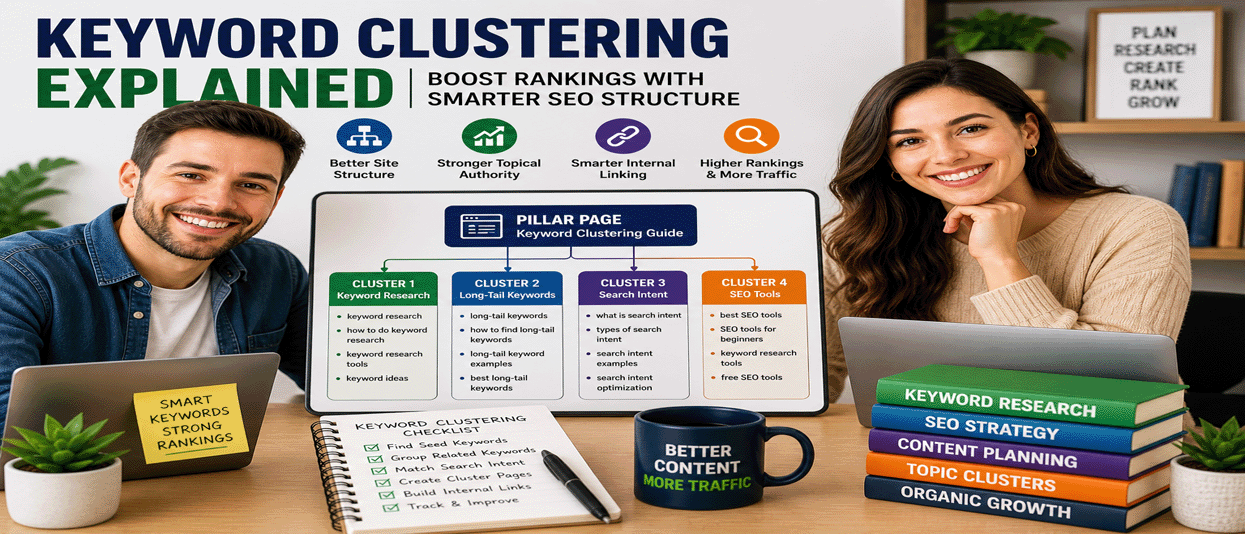
Keyword clustering is a powerful SEO strategy that helps you organize related keywords into clear content groups. Instead of creating random articles around disconnected keywords, keyword clustering gives your website a smarter structure that search engines and readers can understand.
When done correctly, keyword clusters can help improve topical authority, reduce content overlap, strengthen internal linking, and boost organic rankings over time.
What Is Keyword Clustering?
Keyword clustering is the process of grouping related keywords together based on topic, meaning, and search intent. These grouped keywords can then guide your content strategy.
For example, keywords like “keyword research,” “how to find SEO keywords,” “long-tail keywords,” and “keyword research tool” may belong in the same SEO content cluster because they support the same main topic.
Why Keyword Clustering Matters for SEO
Search engines look for helpful, organized content that fully answers a topic. Keyword clustering helps your website cover subjects more completely instead of scattering related ideas across weak pages.
- Improves website structure
- Helps build topic authority
- Supports better internal linking
- Reduces duplicate or overlapping content
- Makes content planning easier
- Helps pages target multiple related keywords
Keyword Clusters vs Topic Clusters
Keyword clusters and topic clusters are closely related. A keyword cluster is a group of related search terms. A topic cluster is a group of related pages built around a larger subject.
For example:
- Keyword Cluster: keyword research, SEO keywords, long-tail keywords, keyword ideas
- Topic Cluster: a main keyword research guide supported by articles on long-tail keywords, search intent, and competitor keywords
How to Create Keyword Clusters
Start with a main keyword, then collect related keywords that support the same topic. Look for similar meanings, related questions, shared search intent, and overlapping search results.
- Choose a main topic
- Gather related keyword ideas
- Separate keywords by search intent
- Group similar keywords together
- Choose one main page for each cluster
- Create supporting articles when needed
- Link related pages together
Example Keyword Cluster
Here is a simple keyword cluster for a website focused on SEO tools:
- keyword clustering
- keyword clusters
- SEO structure
- keyword research
- topic clusters
- SEO content strategy
- content planning
These keywords could support one strong article, while related subtopics could become supporting pages.
How Keyword Clustering Improves Content Planning
Keyword clustering helps you decide which keywords belong on the same page and which deserve separate articles. This prevents your website from competing against itself with multiple pages targeting nearly identical terms.
A smarter structure helps each page serve a clear purpose.
Using Search Intent in Keyword Clustering
Search intent is essential when building keyword clusters. Two keywords may look similar but require different content types.
- Informational: “what is keyword clustering”
- Commercial: “best keyword clustering tool”
- Transactional: “keyword clustering software pricing”
- Educational: “how to group SEO keywords”
Matching keyword clusters to search intent helps you create the right page for the right audience.
How KeywordRetriever.com Can Help
KeywordRetriever.com can help users collect keyword ideas, organize related terms, and turn keyword research into a cleaner SEO content structure. By grouping related keywords into clusters, users can build stronger pages and better content plans.
Suggested SEO Plan for This Article
- Main Keyword: keyword clustering
- Secondary Keyword: keyword clusters
- Supporting Keywords: SEO structure, keyword research, topic clusters, SEO content strategy, search intent, organic rankings, content planning
- Suggested URL: /keyword-clustering-seo-structure
- Suggested Image Alt Text: keyword clustering diagram showing SEO structure and topic clusters
Final Thoughts
Keyword clustering helps turn scattered keyword ideas into a clear SEO structure. It allows you to create stronger content, support topical authority, and guide visitors through related information.
If you want smarter content planning and better organic rankings, start grouping related keywords into clusters. With KeywordRetriever.com, you can organize keyword research into a structured SEO plan that supports long-term growth.
Keyword Related Articles